

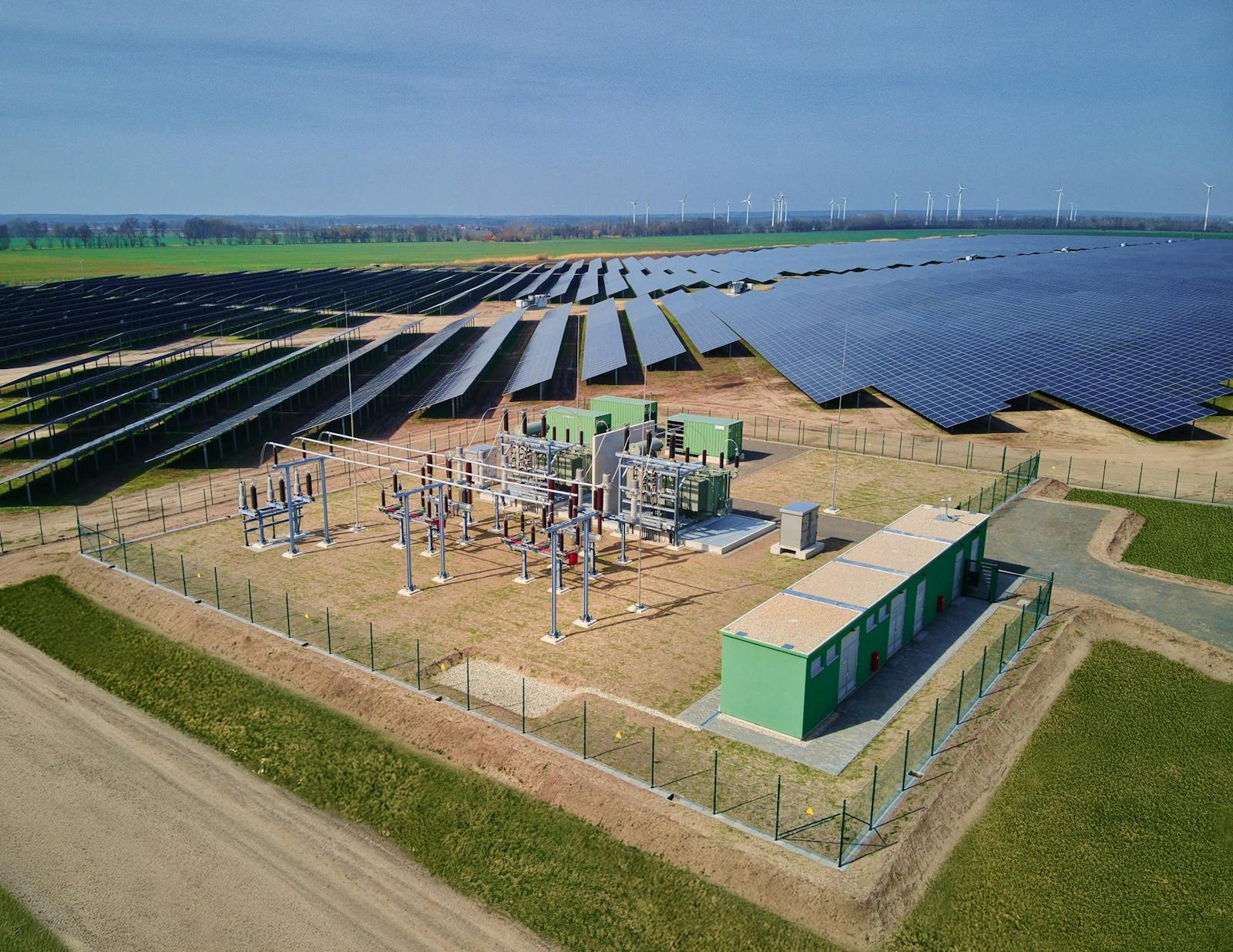
The basics explained
What is a substation?
A substation is an electrical facility in which electrical energy is transformed from one voltage level to another. At its heart is the transformer, which either steps up the voltage or steps it down to a lower level. For example, the electricity generated in a power station or in renewable wind and solar power plants is first stepped up to a high voltage so that it can be transmitted over long distances with minimal losses. At its destination, the voltage is stepped down again before being supplied to consumers.
Voltage conversion is necessary because different parts of the electricity grid operate at different voltage levels – from the high-voltage level in the transmission grid, through medium voltage, to low voltage at the end user’s premises.

Technology made easy
How does a transformer work?
The transformer utilises the magnetic coupling between two coils to transfer electrical energy from one circuit to another, thereby changing the voltage. Energy is transferred between the windings via a changing magnetic field, without there being a direct electrical connection. In this way, electrical energy can be transformed precisely and efficiently from one voltage level to another – the basis of every substation.
Components in detail
Structure and components of a substation
A substation consists of several interlinked components. The busbar bundles the incoming and outgoing power lines, whilst the circuit-breakers reliably cut off the supply in the event of a fault. Modern installations are increasingly being built as gas-insulated switchgear (GIS), as they are space-saving and particularly reliable. This creates a compact and high-performance infrastructure at each site.
The most important components include:
For conversion between voltage levels.

Connected Energy
Substations in the electricity grid: the link between voltage levels
Substations act as the link between the various levels of the electricity grid. In the transmission grid, electrical energy is transported over long distances at very high voltages – often via overhead lines, but increasingly also via underground cables. Transmission system operators ensure that the individual electricity grids remain stable and balanced.
At the network’s interconnections, substations feed energy into the next voltage level. They help to balance out fluctuations, distribute loads and coordinate the feed-in from different sources. Power stations, renewable energy plants and battery storage systems are connected to the electricity grid via substations, thereby feeding their electrical energy into the overall system.
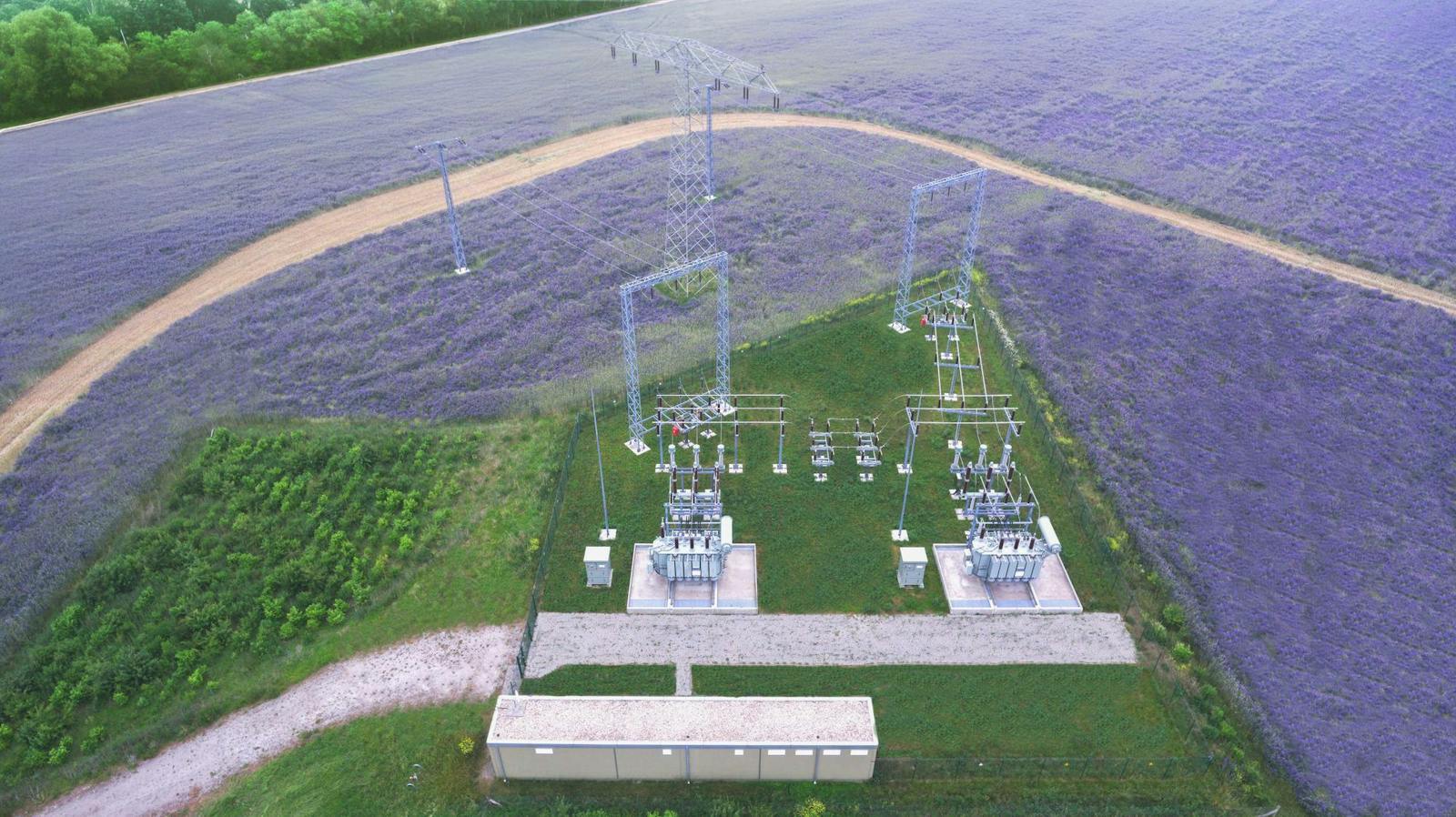
The driving force behind the energy transition
Significance for the energy transition and a stable energy system
As the share of renewable energy grows, so too does the importance of high-performance substations. Wind and solar power plants often generate electricity in a decentralised and fluctuating manner – substations ensure that this energy is fed reliably into the grid. In combination with battery storage systems, generation and consumption can be better balanced, which contributes to a stable energy supply.
A modern substation is therefore a key component of a sustainable energy system: it enables the integration of renewable energy sources and ensures an efficient supply to industry and households.
From idea to installation
Planning, approval and construction of a new substation
Before a new substation can be built, careful planning and a comprehensive approval process are required. This involves considering the suitable location, the connection to the transmission grid and the requirements of the electricity network. The protection of local residents and nature conservation also play an important role – for example, with regard to noise levels from the technical installation. Well-thought-out planning ensures that the infrastructure can be operated safely, efficiently and in harmony with its surroundings in the long term.


Answers to your questions
Frequently asked questions about substations
A substation is an electrical installation within the electricity grid that connects different voltage levels. Transformers are used to convert electrical energy from one voltage to another. This enables electricity from power stations and renewable energy plants to be transmitted safely and made available to consumers.