

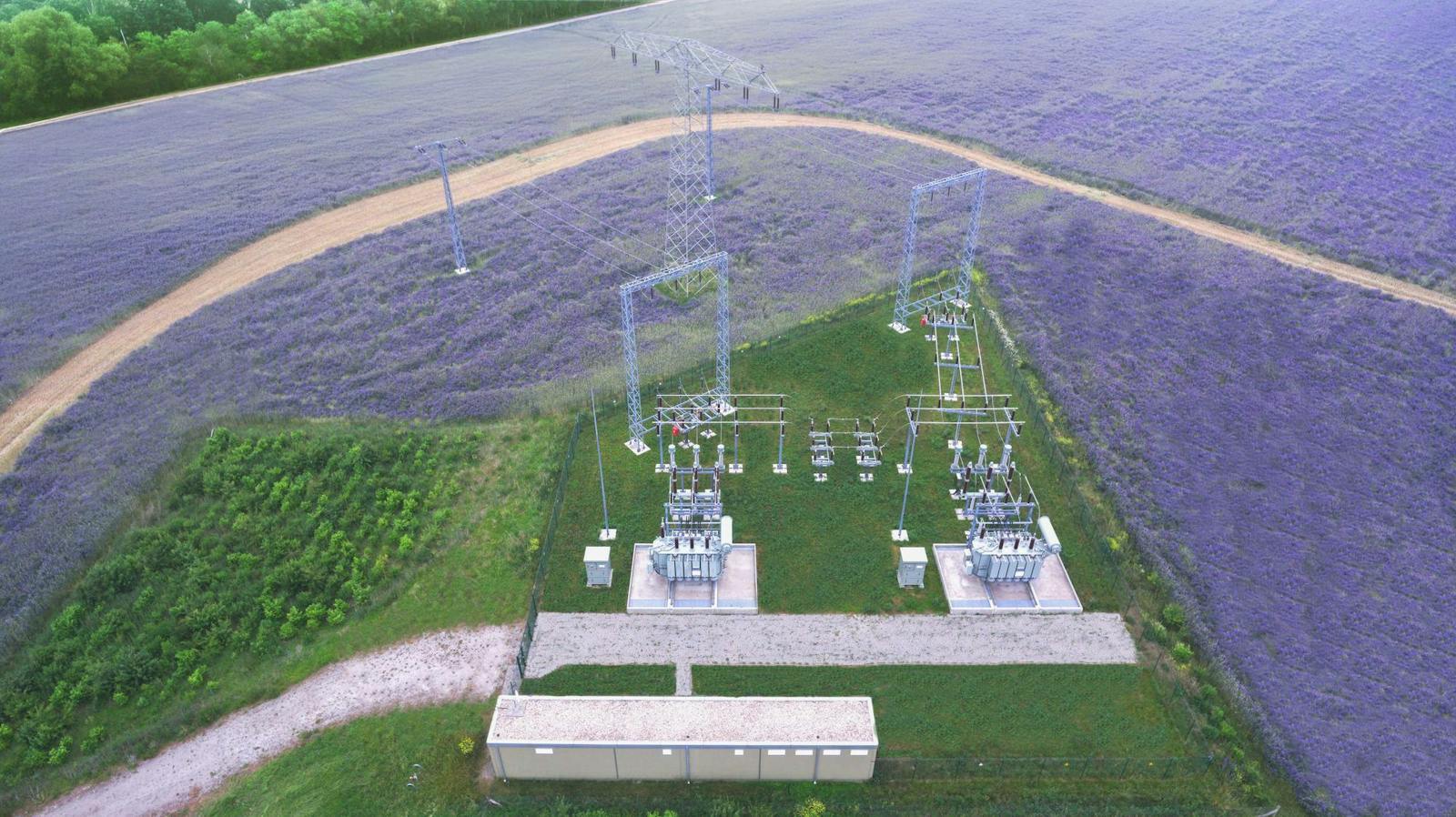
Choose a suitable location
Why the site assessment is crucial to the project’s success
It is not always economically viable or possible to obtain planning permission to build a substation in every location. An early site assessment will determine whether a plot of land is suitable for your project before time and budget are committed to detailed planning. We identify opportunities and risks right from the early stages of the project and develop robust solution concepts – helping you to avoid misguided investments and costly planning loops.
Everything at a glance
We take these criteria into account when valuing a property
Based on your plots of land, we assess all the technical, economic and regulatory factors that determine a site’s suitability:


From area to feasibility
We’ll let you know early on whether your location is suitable
Based on the land parcels you provide, we assess the technical and economic feasibility. We identify potential constraints at an early stage of the project and develop robust solution concepts. In this way, we ensure planning certainty and lay the foundations for efficient, on-time implementation.


The lever
Better to check early than be caught out later
The most costly surprises tend to crop up at the last minute: unsuitable building land, a lack of access for the transformer, a protected area or a grid connection point that is too far away. We clarify these issues before you commit to a site, ensuring that your timeframe and budget are robust.
Possible restrictions
What restrictions a plot of land may be subject to
A site investigation report assesses bearing capacity, groundwater levels and foundation requirements. Sloping sites increase the amount of earthworks required.
Solution concepts
If a location is only partially suitable
It is rare for a location to be a definite ‘no’. There are usually viable options.


What we need from you
That’s how we quickly arrive at a conclusion
To carry out a comprehensive site assessment, we require the following information from you: land parcels (cadastral district, cadastral section, parcel number), owner details and, where applicable, powers of attorney, the planned connected load for the project, and any existing reports or plans, if available.
Their clear lead
The benefits of a professional property survey
Planning certainty
by assessing all the relevant factors at an early stage.
Cost transparency
and avoiding costly planning loops.
Implementation on schedule
thanks to a realistic assessment of feasibility.
A point of contact
From the green field to the handover of the keys.
Over 20 years’ experience
in the construction of substations ranging from 10 to 380 kV.
FAQ
Frequently asked questions about the plot and location
This depends on the voltage level, the switchgear, the transformers and the scope for expansion, ranging from a few thousand square metres to several hectares. The exact area is determined by the plant design.

Your contact person
Let us check your location
Send us details of your plots of land, and we’ll tell you early on and with a high degree of certainty whether your site is suitable.
Robert Stefaniak
Sales Manager